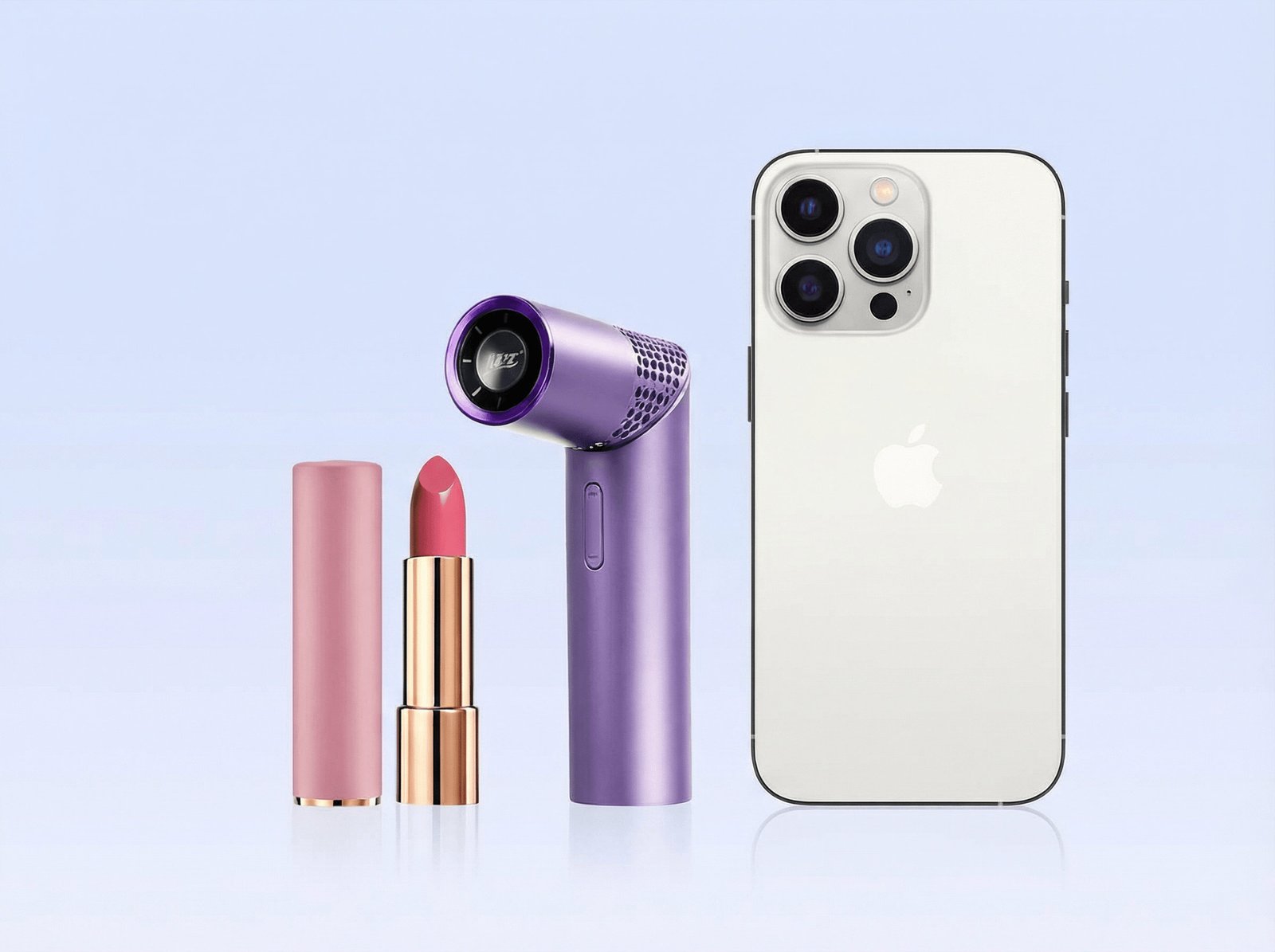
A Small Desk Fan or a Handheld Fan? What Works Better at Work
When people look for cooling at work, they usually end up considering two options: a small desk fan or a handheld fan.
At first, the choice seems obvious. If you work at a desk, a desk fan sounds like the more natural option. It is made for a tabletop, it can stay in one place, and it does not need to be held. But once you think about how real workdays actually feel, the answer becomes less simple.
Work is not always one fixed situation.
Some people move between desks and meetings. Some split time between office and commuting. Some work in shared spaces, cafés, front desks, or temporary setups. Some want airflow while getting ready in the morning, cooling during a commute, and a quick desk setup once they arrive. In real life, workday comfort often depends more on flexibility than on a single-purpose device.
That is why the better question is not just which one belongs on a desk.
The better question is which one works better across the way your workday actually moves.
In many cases, a small desk fan and a handheld fan solve different problems. One is built for staying in one place. The other is built for personal, flexible use across different moments. If your day includes more than just sitting in one spot, that difference matters more than most people expect.
So what actually works better at work?
Let’s break it down.
What a Small Desk Fan Does Best
A small desk fan has one very clear advantage: it is built to stay on a desk and provide steady airflow without needing to be held.
If you work in one consistent space for long stretches, that can be useful. A desk fan works well when you want background airflow while typing, reading, taking calls, or sitting through a long work session. You place it once, point it where you want it, and let it run.

That makes sense for people who:
- work at the same desk for most of the day
- do not need portability
- want continuous light airflow
- do not mind keeping a fan permanently on their work surface
In that kind of setup, a desk fan can feel simple and reliable.
The limitation is that it usually does only that one job.
It stays where it is placed. It is useful while you are there, but much less useful when you are moving, commuting, stepping away, or trying to keep your bag light and practical.
What a Handheld Fan Does Better
A handheld fan works differently.
Instead of giving one fixed kind of airflow in one fixed place, it gives you more control over when you use it, where you use it, and how easily you can take it with you.
That makes it especially useful for workdays that include movement.
For example, a handheld fan can help when you are:
- walking to work
- waiting for transit
- cooling down before sitting at your desk
- taking a short break
- moving between rooms or workstations
- sitting briefly at a desk, café table, or reception area
- heading back out after work
That is where a mini handheld fan often becomes more practical than people expect.

It is not just a desk product. It is a workday product.
Instead of helping in only one location, it helps across the small hot moments that happen before work, during work, and after work. For many people, that ends up being more useful overall than owning a fan that never leaves the desk.
The Real Difference Is Flexibility
If you only compare these two products in terms of desk use, the desk fan may seem like the obvious winner.
But most people are not trying to cool one square foot of desk space. They are trying to feel more comfortable throughout the day.
That is why flexibility matters so much.
A small desk fan is useful when you stay in one place. A handheld fan is useful when your day includes transitions.
And many workdays are full of transitions:
- leaving the house
- commuting
- entering a warm building
- sitting at a desk
- stepping out for lunch
- moving between offices or stations
- returning home
A product that supports more of those moments often feels more worthwhile.
That is why a portable fan for work can be the better choice for people who care about more than just what happens at the desk itself.
Desk Use Is Not Always as Simple as It Sounds
A lot of people imagine desk cooling in a very fixed way: fan on desk, airflow toward face, problem solved.
But real desk use is often less ideal than that.
Maybe your workspace is small. Maybe you do not want another device permanently taking up room. Maybe you work in a shared office and want something more personal. Maybe you do not always sit in the exact same place. Maybe you only need airflow for short periods, not all day.
That is where the decision changes.
A handheld fan can often cover desk use surprisingly well, especially when it has a foldable design or can be positioned for short tabletop sessions. It may not replace a full desk fan for continuous all-day airflow, but it can feel much more practical for lighter, more flexible workday needs.
If you want something that can move easily from commute to desk to bag again, a foldable handheld fan often makes more sense than a product designed only for staying on one surface.
Which One Takes Up Less Mental Space?
This is something people rarely think about before buying.
A product can be useful and still feel like one more thing to manage.
Desk fans often stay visible all the time. They take up desk space, add another cable or object to your work area, and can feel like part of the setup whether you need them in that moment or not.
A handheld fan usually creates less visual and physical clutter because it is there when you want it and gone when you do not.
That matters in small workspaces, shared desks, cleaner setups, and routines where people do not want extra objects constantly sitting out.
A good compact handheld fan often feels easier to live with because it gives you airflow without turning into a permanent desk item.
For many people, that makes it feel more modern, more practical, and more aligned with how they actually work.
When a Small Desk Fan Makes More Sense
To be fair, a desk fan can still be the better option in some situations.
It usually makes more sense if you:
- work at one desk for long hours every day
- want steady airflow without holding anything
- do not care about portability
- have enough desk space
- prefer a fan that stays in one place all the time
If that describes your work routine, a desk fan may suit you well.
The important thing is that this is a very specific type of routine. Not everyone works that way anymore.
When a Handheld Fan Makes More Sense
A handheld fan is often the better choice if you:
- commute to work
- move between spaces during the day
- want one fan for both work and travel
- have limited desk space
- prefer something easy to store in a bag
- only need airflow in short or changing moments
- want a product that works before, during, and after work
That is why many people end up preferring a portable fan for daily carry instead of a desk-only solution.
It is simply more versatile.
And in daily life, versatility often wins.
So What Works Better at Work?
The answer depends on how you work.
If your routine is stable, desk-based, and mostly stationary, a small desk fan can make sense.
But if your workday includes commuting, transitions, short cooling moments, limited desk space, or the need for one product that works across multiple parts of the day, a handheld fan is often the smarter choice.
That is especially true if you want something compact, easier to store, and more flexible in how you use it.
For many modern routines, the question is no longer “Which fan belongs on a desk?” It is “Which fan fits the whole day better?”
And very often, that answer is a handheld one.
If you want an option designed for commute, desk use, travel, and everyday flexibility, the KLIHK mini handheld fan is built for exactly that kind of routine.
If you have questions about ordering or support, you can always visit our Contact Us page.
FAQ
Is a handheld fan good for office use?
Yes, especially if you want something flexible that can work during commuting, short desk sessions, and changing workday routines.
Is a desk fan better than a handheld fan for work?
It depends on your routine. A desk fan is better for steady airflow in one fixed place, while a handheld fan is better for flexibility and portability.
Can a handheld fan work on a desk?
Some can, especially foldable models that allow short tabletop use or adjustable positioning.
Which is better for a small workspace?
A handheld fan is often better for small workspaces because it does not need to stay on the desk all the time.
Should I buy a desk fan or a handheld fan for commuting to work?
If commuting is part of your daily routine, a handheld fan is usually the more practical choice because it can help before, during, and after you reach your desk.
Final Thoughts
A small desk fan works well when your day stays in one place.
A handheld fan works better when your day moves.
That is the difference that matters most at work. If your routine includes commuting, flexible desk use, small spaces, and short hot moments throughout the day, a handheld fan often gives you more value than a fan designed only for a tabletop.
If that sounds closer to how you work, explore the KLIHK portable fan for work for a more flexible everyday option.